First 50 students online • January 2026
Kintsugi: Learn The 500-Year Old Traditional Art Of Fixing Broken Ceramics With Gold—For The First Time Online (Learn In 2 Hours)
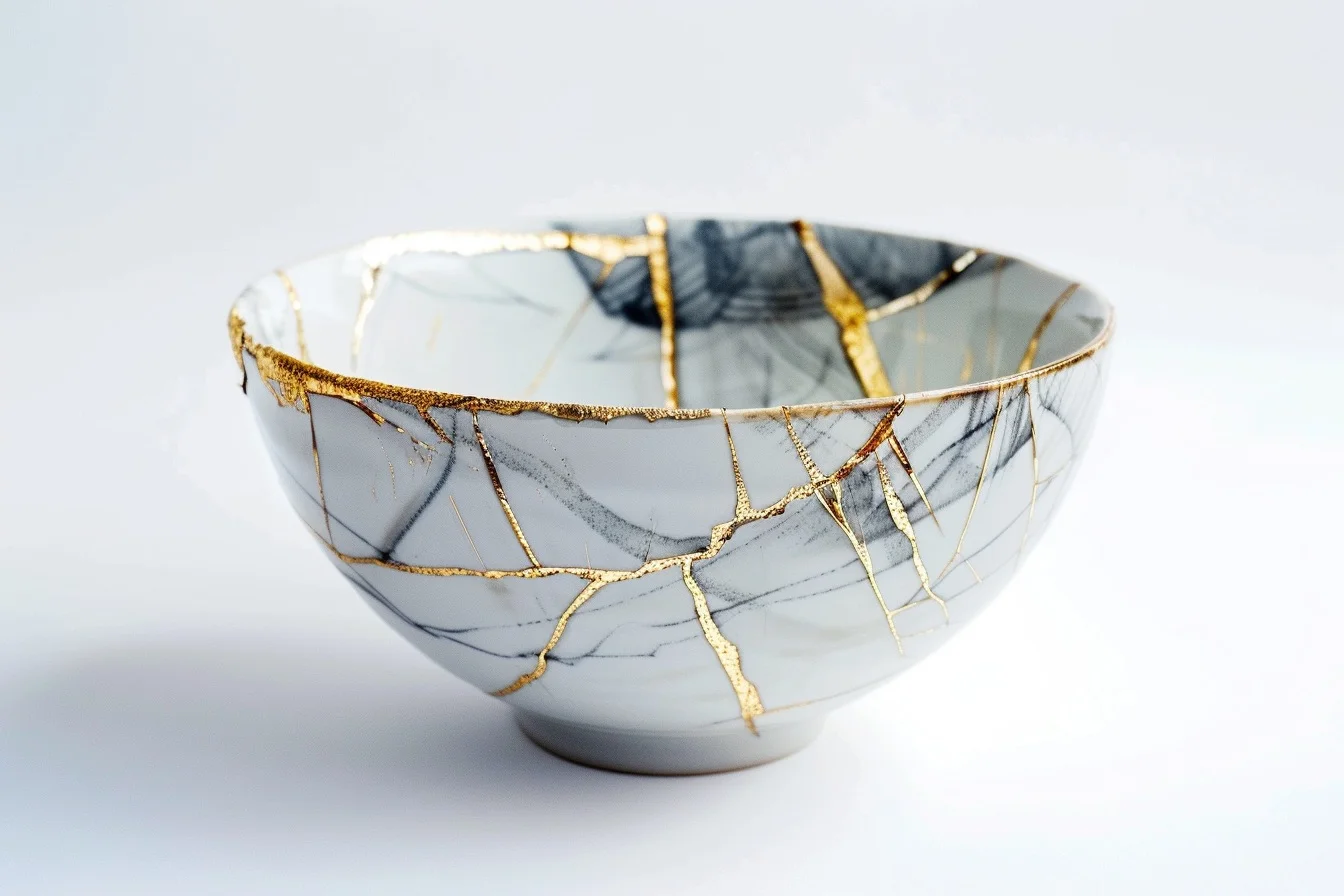
When Something Breaks
Your grandmother's teapot slips from your hands.
It shatters.
In the West, you'd throw it away. Broken = worthless. Another thing lost. Another memory gone.
What If That's Wrong?
What if that break wasn't the end - but the beginning of something more beautiful than the original ever was?
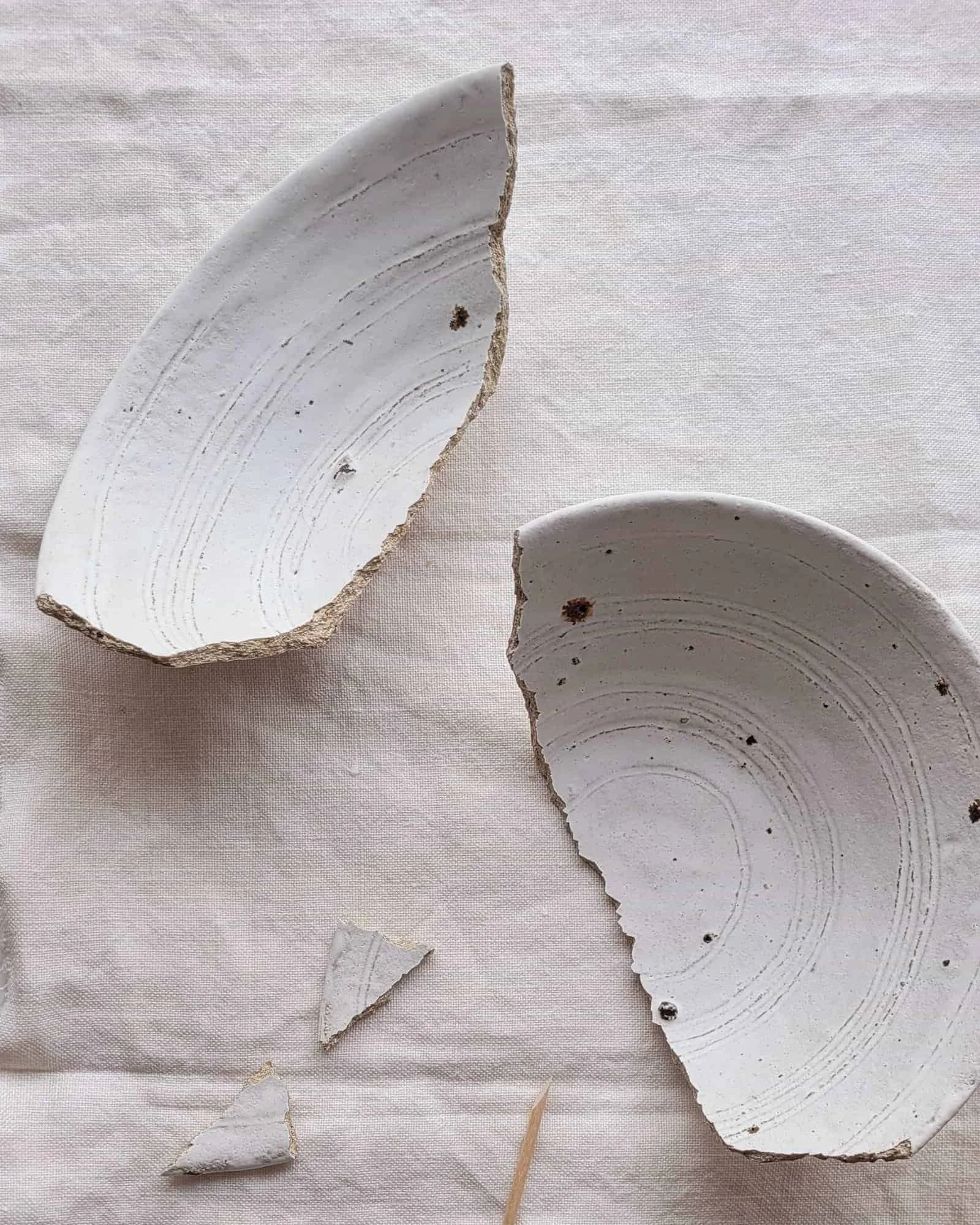
We've Lost Something
We're taught that broken things lose their value.
A cracked mug? Trash.
A chipped bowl? Donate pile.
Your favorite ceramic piece that fell? Gone.
And it's not just about the object.
It's the memory. Your grandmother's hands wrapping around that teacup every morning. The bowl you made in that pottery class. The vase from your first apartment.
When they break, we lose the story.
But Here's What Really Keeps You Up At Night
You scroll. You consume. You watch. You buy things made by machines in factories.
When was the last time you CREATED something?
When was the last time you made art with your hands that made someone say "Wait... YOU made this?"
When was the last time you felt completely present - not thinking about work, not checking your phone, just... creating?
You want a hobby that's actually meaningful. Something meditative. Something therapeutic.
Not another thing to consume. Something to CREATE.
A 500-Year Old Practice
My name is Yuki.
I've spent years studying kintsugi - not just the technique, but the philosophy behind it. I've learned from Japanese masters who've practiced this art for decades. Masters who've received recognition from the Japanese Emperor. Masters whose families have been repairing ceramics for generations.
What struck me wasn't only the craft. It was watching people's faces when they received their repaired pieces.
A woman brought in her late mother's rice bowl, cracked down the middle. "Can you save it?" she asked.
"It's not about saving it. It's about showing what it survived."
When she came back and saw the crack glowing with gold, she cried. They always cry.
That's when I knew this wasn't only a craft. It was something that needed to be shared.
Why I'm Teaching This Online For The First Time
Most people aren't able to spend thousands of dollars to travel to Japan any time soon. They'll never sit in a studio with a master. Never experience the meditative practice of repairing something broken with gold.
People started asking me to teach them. One woman wrote:
"I need to learn this. I have scars, and kintsugi reminds me that what's broken can become more beautiful than before."
That's when I knew I had to share this. Not just the technique - but the philosophy. The meditation. The meaning.
I put everything I've learned into a 2-hour video course. The exact techniques, the philosophy, the materials that cost under $30, not $200 or more. Everything you need to start your first repair.
The Philosophy Behind The Gold
Wabi-Sabi (侘寂)
Most hobbies punish mistakes. Mess up a painting? Start over. Ruin the recipe? Throw it out.
Kintsugi is the opposite.
Wabi-sabi is the Japanese philosophy of finding beauty in imperfection and impermanence. Embracing asymmetry, roughness, and the marks of weathering as elements that deepen character rather than diminish it.
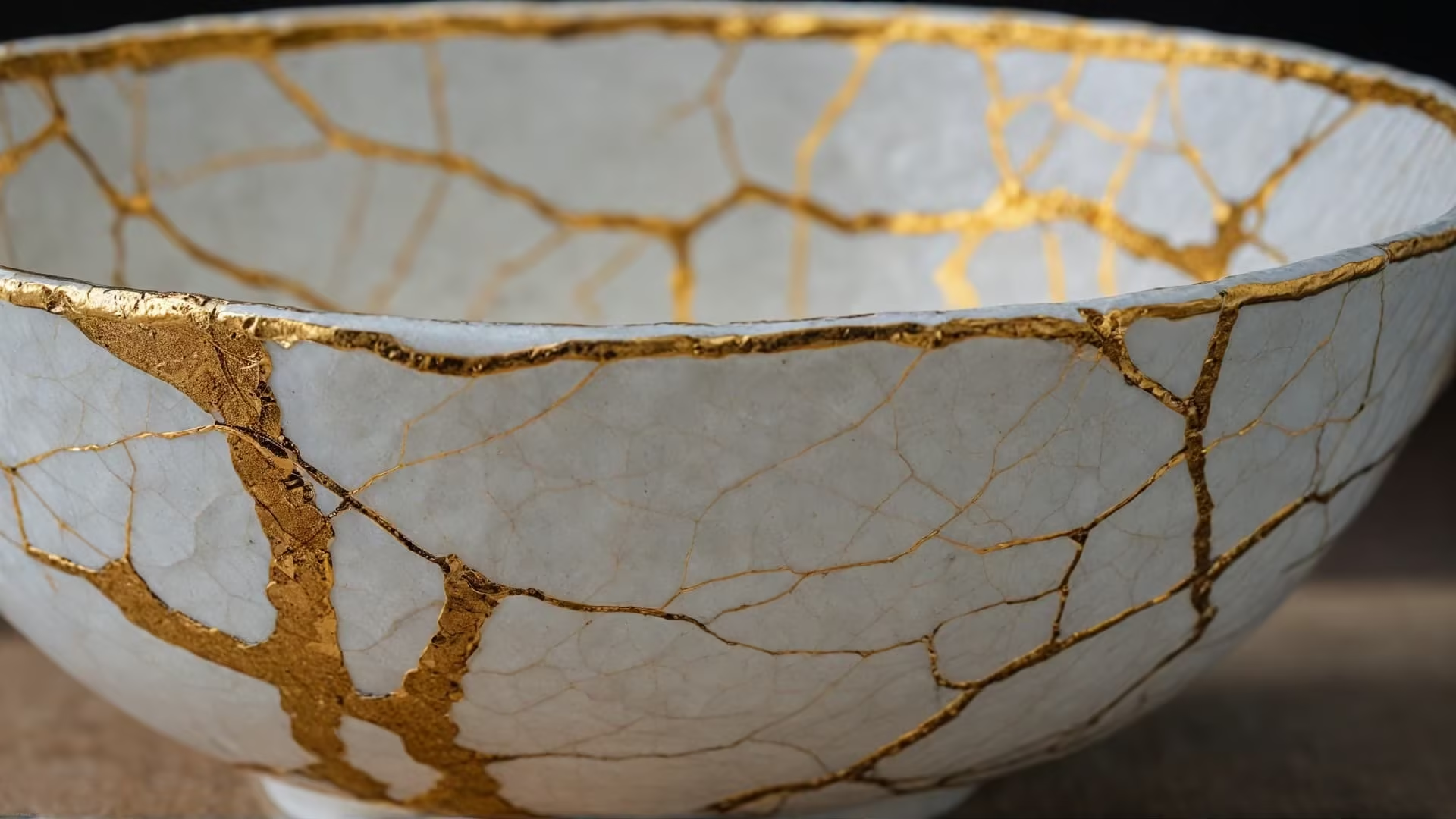
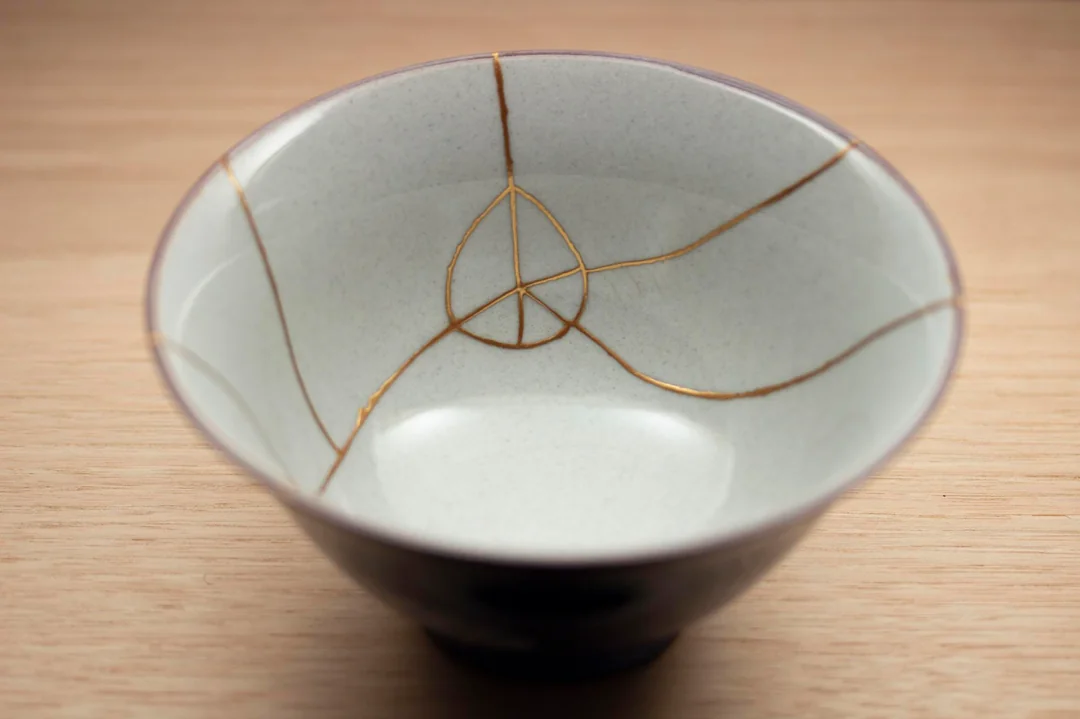
The cracks become rivers of light. The chips become character. The break becomes the story.
Mottainai (もったいない)
In a world of fast fashion and planned obsolescence, the Japanese concept of mottainai - regret for waste - offers a different path.
Kintsugi treats broken objects as worthy of care and investment rather than replacement. Your grandmother's teacup doesn't end up in a landfill. It becomes an heirloom.
Mono no Aware (物の哀れ)
The pathos of things. The poignant beauty that comes from impermanence.
A pristine bowl is beautiful. But a bowl that's been loved, broken, and repaired with gold? That bowl has lived. That bowl has a story. That bowl understands what it means to survive.
More Than Pottery
Here's what students don't expect:
Kintsugi becomes a metaphor. Your breaks, your scars, your healing - they don't make you damaged. They make you more valuable. More beautiful. More yourself.
Contemporary psychology calls this post-traumatic growth. The Japanese have known it for 500 years: what breaks you can make you whole in ways you never were before.
You came to repair a bowl. You might leave understanding how to repair yourself.
"The bowl is more beautiful for having been broken."
What You'll Learn
Foundations & Materials
Everything you need before your first repair
- • Complete materials list with exact product links (under $30 total)
- • Food-safe epoxy that's dishwasher-safe (top rack)
- • The 5 types of damage: hotsu, nyuu, ware, yobi, kake
- • Setting up your workspace
- • The wabi-sabi philosophy: beauty in imperfection
Hotsu & Nyuu (Chips & Hairlines)
Start with the easiest repairs
- • Filling small chips (hotsu) with gold
- • Tracing hairline fractures (nyuu) that haven't separated
- • Mixing ratios and consistency for fine work
- • Brush techniques for thin, luminous lines
- • Perfect first project: your first golden repair
Ware (Clean Breaks)
Repair pieces that have broken apart
- • Aligning broken pieces perfectly
- • Adhesion technique for strong bonds
- • Creating beautiful gold seam lines
- • Multi-piece breaks: strategy for 3+ fragments
- • Timing: when to wait, when to work
Yobi & Kake (Missing Pieces)
The most advanced repairs: filling gaps
- • Building up missing fragments (yobi)
- • Filling larger losses (kake) with gold
- • Creating structural integrity without original pieces
- • Blending new material with existing ceramic
- • Turning missing pieces into design features
Finishing & Troubleshooting
Polish, seal, and fix common mistakes
- • Polishing for maximum shine (togi technique)
- • Food-safe sealing for daily use
- • Dishwasher care (top rack, gentle cycle)
- • Common mistakes and how to fix them
- • Long-term care for heirloom-quality repairs
Plus Six Bonuses
Beyond Ceramics
Repair more than just pottery
- • Glass repair techniques
- • Wood and lacquerware
- • Stone and marble pieces
Value: $27
Quick Reference Card
Printable cheat sheet for your workspace
- • Exact mixing ratios
- • Timing for each step
- • At-a-glance process guide
Value: $17
Troubleshooting Guide
Fix common mistakes fast
- • Epoxy too thick or thin?
- • Gold clumping or uneven?
- • Repair cracked again?
Value: $27
Sharing Your Work
Build confidence and share your craft
- • Photography tips for showing the gold
- • How to talk about your work
- • Teaching kintsugi to friends
Value: $47
Meditation & Mindfulness
Deepen the therapeutic practice
- • Breathwork while repairing
- • Entering flow state
- • Journaling prompts on beauty & brokenness
Value: $37
Gift Creation Guide
Create meaningful gifts for loved ones
- • 10 best thrift store finds under $5
- • Gift presentation ideas
- • Repair timeline for any occasion
Value: $27
Founding Student Pricing
Complete Class Value:
5 Core Modules - 2 hours ($297)
6 Bonus Trainings ($182)
Subtitles in English, Spanish, Portuguese, German, Italian, French & Japanese
Lifetime Access (Priceless)
Total Value: $479
Regular Price: $97
$47
Founding student pricing • First 50 students
90-Day Money-Back Guarantee
Try the entire class. Do your first repair. If you don't love it, email us within 90 days for a full refund. No questions asked.
Secure Payment via Stripe
Frequently Asked Questions
I'm not artistic or good with my hands - can I still do this?
Yes. This isn't about natural talent. It's about following a technique that's been refined over generations. If you can hold a brush and follow instructions, you can do this. Kintsugi requires patience, not perfection.
How much do the materials cost?
Under $30 for your complete starter kit. This includes everything: food-safe epoxy, gold powder, brushes, mixing tools. These materials will last for 10+ repairs. We provide exact shopping links so you don't waste money on the wrong supplies.
Are we using traditional urushi lacquer?
No. Traditional urushi lacquer costs $200+, can cause severe allergic reactions, and requires extensive safety equipment. We use modern, food-safe epoxy alternatives that cost under $30 and work beautifully. You get the same golden result without the expense or health risks. The technique and wabi-sabi philosophy remain authentic.
Is this culturally appropriate for me to learn?
Yes. This is a craft meant to repair and create beauty - it doesn't belong only to Japan. Japanese artisans have been teaching international students for decades. The only requirement is that you approach it with respect for the philosophy behind it. If you're worried about this, that respect is already there.
Will the repair actually be strong enough to use the piece again?
Yes, absolutely. The epoxy adhesives we use are incredibly strong - stronger than the original ceramic in many cases. Your repaired pieces will be fully functional and dishwasher-safe (after proper sealing, which we teach in Module 5). These repairs last for decades with normal use.
How long does a repair take?
A simple crack: 30-45 minutes of active work (plus drying time overnight). Complex pieces with multiple breaks: 2-3 hours of work spread over a few days. But this isn't rushed. It's meditative. You work in the evening, let it dry overnight, continue the next day. The pace is part of the practice.
What's your refund policy?
We offer a simple 90-day money-back guarantee. Try the entire class. Do your first repair. Share it with friends. If you don't absolutely love it, just email us within 90 days and we'll refund you in full. No questions asked. No hoops to jump through. We only want students who love learning this craft.
Do you have subtitles or captions?
Yes! The audio is in English, and we have subtitles available in English, Spanish, Portuguese, German, Italian, French and Japanese. You can toggle them on and off in the video player.
Have a specific question? Reach out at support@kintsugiclass.com
"The bowl is more beautiful for having been broken."
— Yuki
I've spent years learning from Japanese masters.
Now I want to teach you.
90-Day Money-Back Guarantee • Secure Checkout • Instant Access